
 1
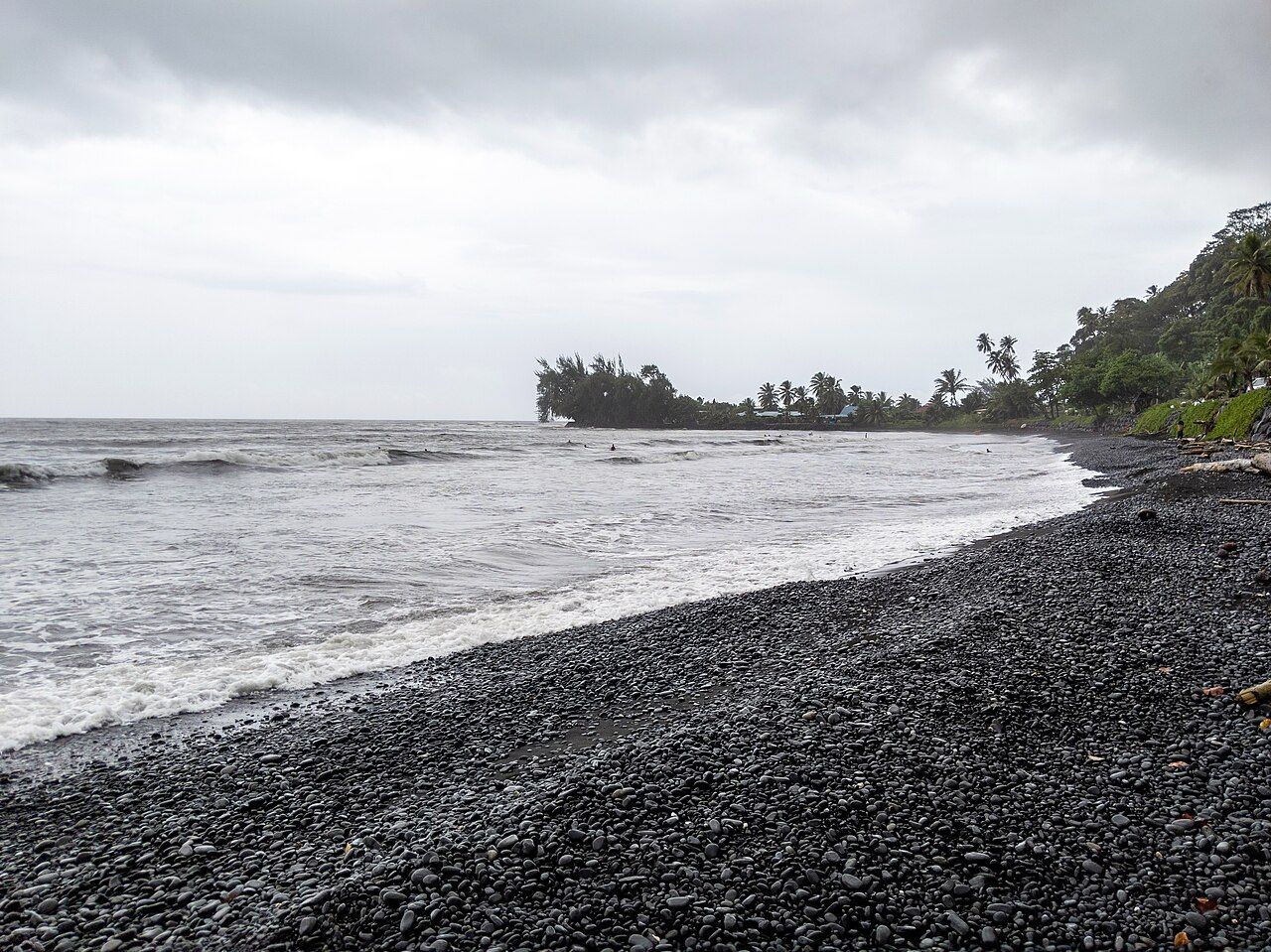
The east coast of Tahiti faces the trade winds, and it shows. The ocean breaks directly against the shore here, with little lagoon to soften it, and the rain that the wind brings feeds rivers, waterfalls and dense green forest. Black-sand beaches, made of ground volcanic rock, line the coast in a long dark string.
The coast road from Papeete runs east through Arue and Mahina, then south along the windward coast towards Taravao. A day trip along it combines history, natural sights and simple food. This guide follows the road in order, from Point Venus to the waterfalls.
Point Venus and the lighthouse
Point Venus, in Mahina, is a low sandy point at Tahiti's northern tip, a short drive from Papeete. It is one of the island's most historic places. In 1769, Captain James Cook set up an observatory here to watch the transit of Venus across the sun, and the point has carried the planet's name ever since. Earlier and later European expeditions also landed here, and painters on Cook's voyages recorded the scene.
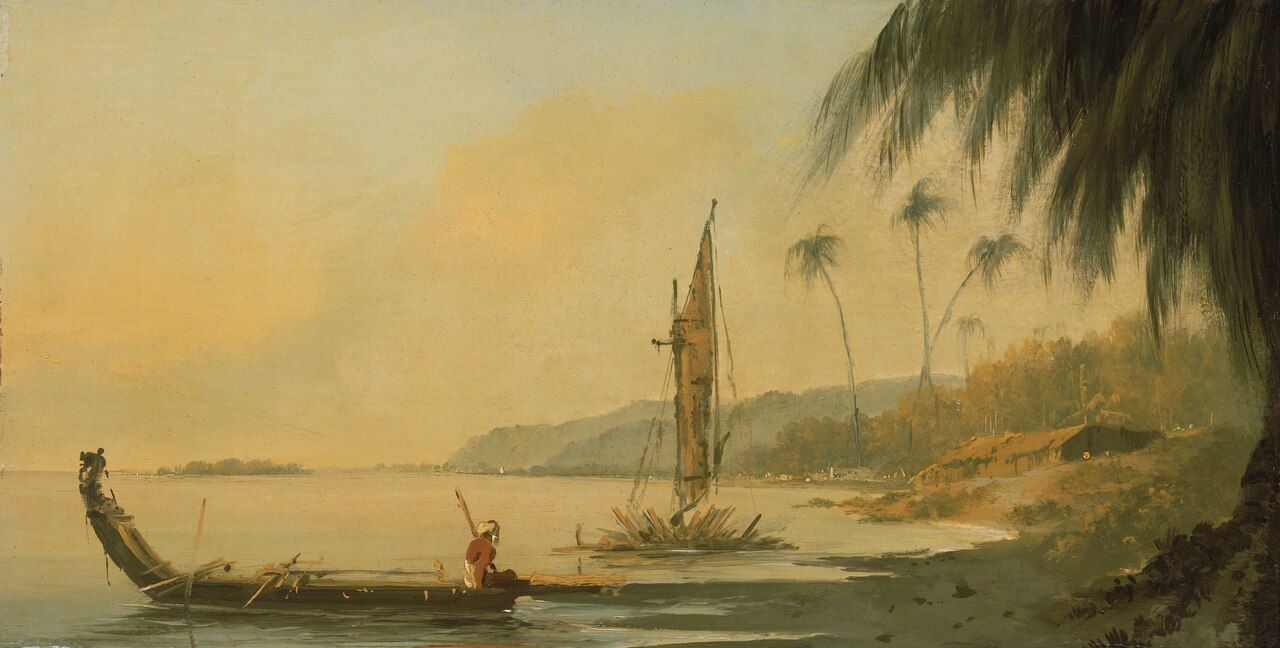
Today the point has a white lighthouse, built in the nineteenth century, a few monuments, shady trees and a long black-sand beach. Families come to swim and picnic at weekends. The water is generally calm in the lagoon close to the point, but watch for currents and stay inside the marked areas.
Look out across the water: on clear days you see Moorea's peaks on the horizon to the west. The guide to Moorea's northern bays shows the view in reverse.
The Arahoho blowhole
Further along the coast road, near Tiarei, the Arahoho blowhole is one of Tahiti's best-known natural sights. Waves rush into a channel in the black lava rock beneath the road, and when the swell is strong, the pressure forces seawater up through a hole in a spray that can reach several metres. The sound is part of the show: a hiss and a roar each time a wave comes in.
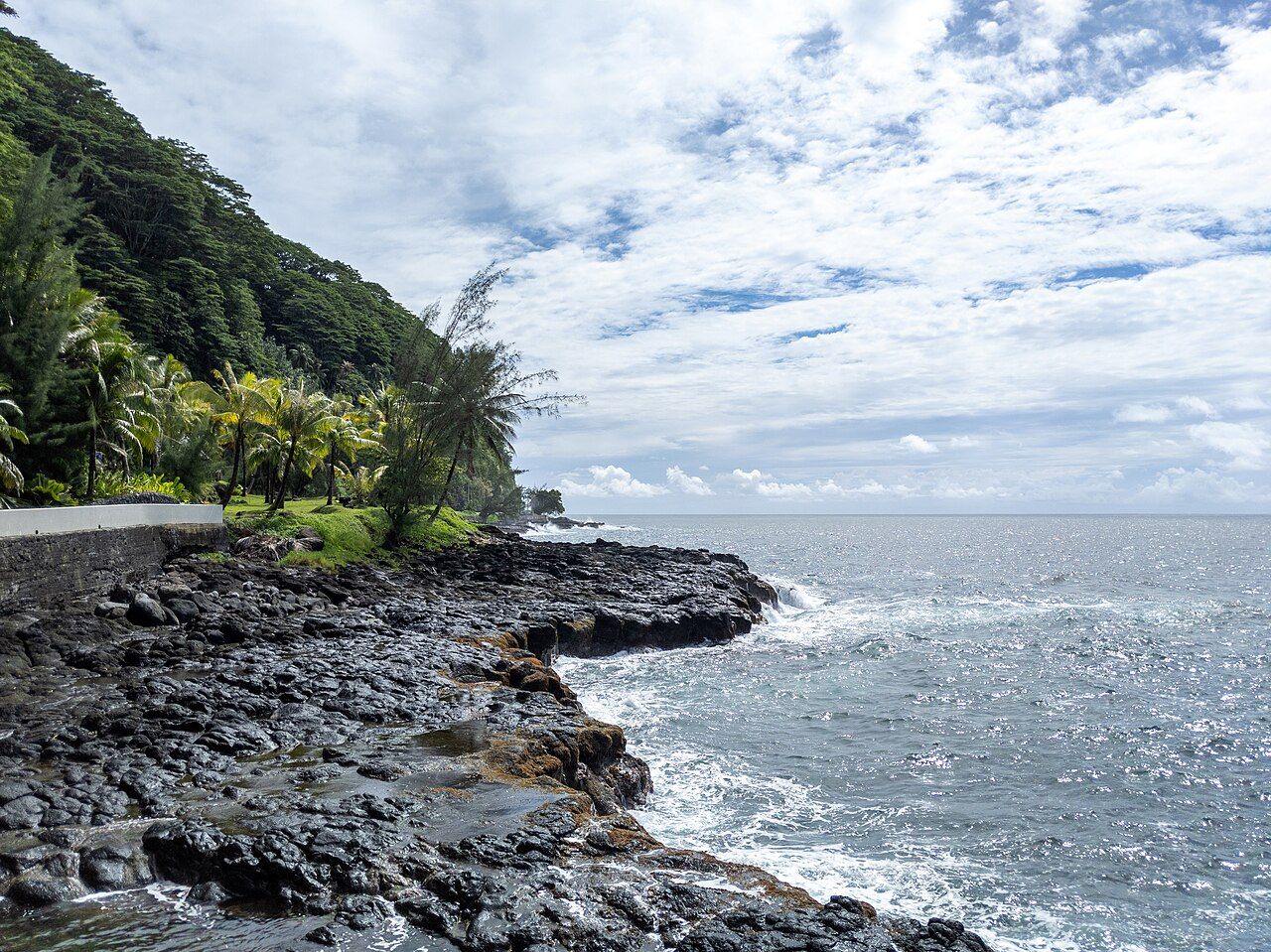
The blowhole is right beside the road, with a small parking area. Watch from a safe distance: the rocks are slippery and waves can surge without warning. Do not climb onto the rocks or stand close to the hole, especially in big swells. Below the blowhole, a small black-sand cove sometimes has calm water, but the surf here can be strong and swimming is safest only on very calm days.
The Faarumai waterfalls
A short distance past the blowhole, a side road leads inland to the Faarumai waterfalls. After a few minutes' drive through a narrow valley, a short path through tropical forest reaches the first fall, Vaimahutu, a tall, thin cascade dropping down a cliff into a pool. Other falls lie further along the valley, reached by longer and rougher paths.
Also on the menuUp into Moorea's green interior
The falls are most impressive in the wet season, roughly November to April, and after heavy rain. Paths can be muddy and slippery, so wear sturdy shoes and watch your step. Do not swim in the pools after heavy rain, as water levels can rise quickly and rocks fall from the cliffs. Mosquitoes are common in the valley, so bring repellent.
For more walking on the other island, the guide to Moorea's hiking trails covers viewpoints and waterfalls there.
Black-sand beaches
The black sand of Tahiti's beaches comes from volcanic rock, broken down by waves into fine grains and pebbles. The colour is striking, especially against white surf and green palms. The sand gets very hot in the sun, so wear sandals.
Several beaches along the east coast road have black sand, from the point at Mahina to small coves further south. Some are calm, sheltered by a reef; others face open ocean, with strong waves and currents. Swim only where local people swim, and stay out of the water when surf is high. Surfers use some of the breaks along this coast, and you may see them waiting for waves at river mouths.
Eating along the east coast
The east coast has fewer restaurants than the west, but plenty of simple food. Fruit stands sell bananas, papayas, mangoes in season, limes and coconuts, often opened on request so you can drink the water. Snack bars in the villages serve lunch plates of grilled fish, poisson cru, chicken and chao men.
A picnic works well on this coast: buy bread and fruit before you leave Papeete or in a village along the way, and eat by a beach or under the trees at Point Venus. The guide to island fruit helps you choose the ripest papayas and mangoes. If you buy raw fish, keep it cold and eat it soon.
Making a day of it
The east coast fits easily into a day trip from Papeete. Start early at Point Venus, before the beach fills up, then drive south to the blowhole and the waterfalls. Continue to Taravao for lunch and, if you have time, carry on to Tahiti Iti, or return the same way.
The road is narrow in places and can be busy near Papeete, especially at rush hour. Drive carefully, watch for children and dogs in the villages, and allow more time than the distance suggests. Buses run along the coast but services are limited, so a rental car is the most practical choice; check before you go.