
 1
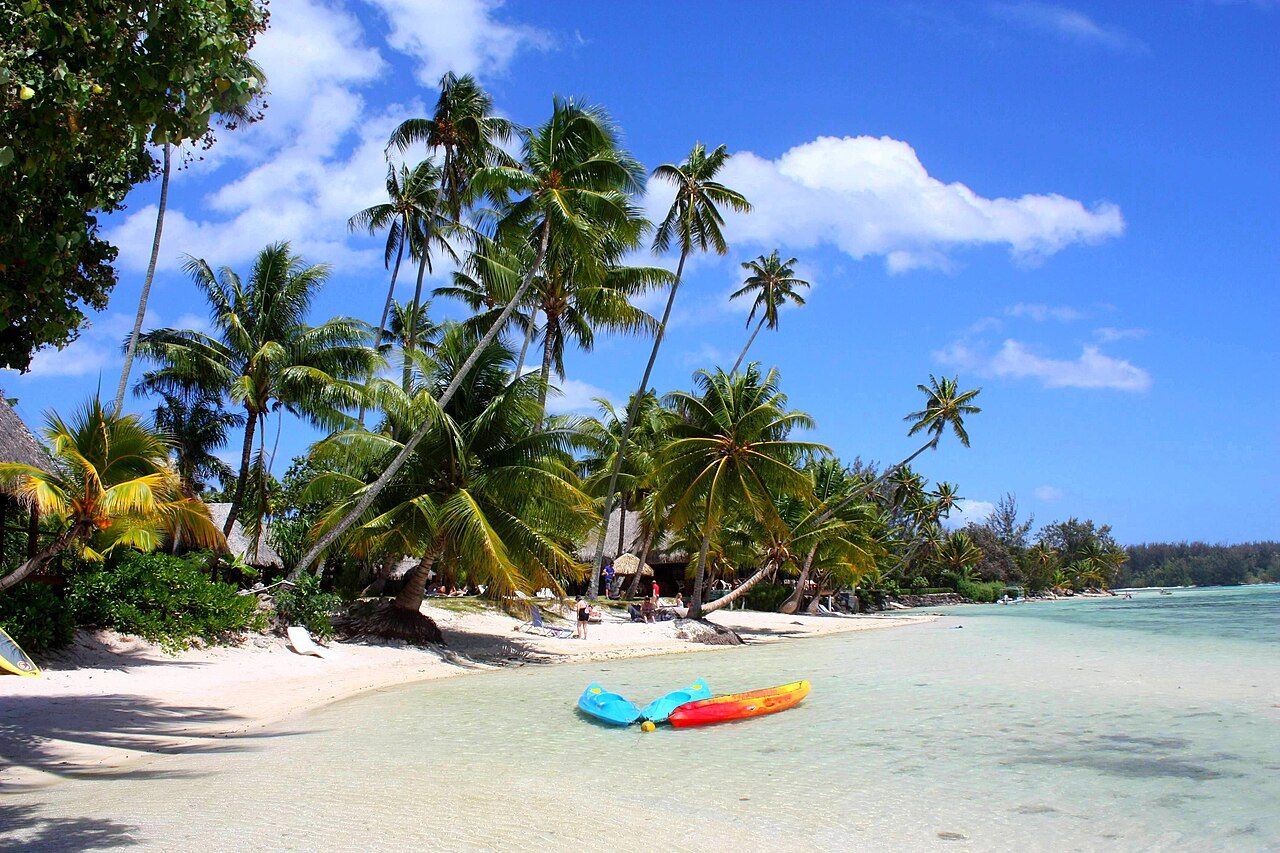
Moorea is small enough to drive around in a couple of hours, but that would miss the point. The coast road, about 60 kilometres long, keeps close to the lagoon most of the way, passing through villages, past churches and fruit stands, and round the deep bays of the north coast. Take a full day, stop often and you see the island in all its moods.
The road has kilometre markers, known as PK (points kilométriques), counting from the ferry area on the east coast in both directions. Addresses on Moorea are often given as a PK number and a side, mountain or lagoon. This guide follows the loop clockwise from the ferry dock at Vaiare, but the direction matters less than the stops.
Getting around: car, scooter or bicycle
The ferries from Papeete arrive at Vaiare, on the east coast. A car is the easiest way to drive the loop, and rentals are available on the island. Scooters are popular and fun on the flat sections, but you need experience, a licence and real care, since the road is narrow, busy in places and wet after rain. Cycling the whole loop is possible for fit riders, with hills near the bays and the north coast; many people cycle a section instead.
Fuel stations are spread out, so start with a full tank. Prices on Moorea for most things are high by international standards, so check before you go and carry cash for fruit stands. The guide to ferries, flights and costs has more on budgeting and crossing from Tahiti.
The north coast: Maharepa and the bays
Heading north from Vaiare, the road passes Temae and the airport, then reaches Maharepa, a stretch of coast with shops, a bank, a few boutiques and small cafes. It is a good place to pick up supplies for the day: water, a casse-croûte (a baguette sandwich), fruit and something cold.
Beyond Maharepa the road rounds Cook's Bay, with Paopao village at its head, crosses the base of Mount Rotui and follows the shore of Opunohu Bay. Both bays deserve time, and a short detour up the Opunohu valley leads to the marae and the Belvedere lookout. The story on Cook's Bay and Opunohu Bay covers this stretch in detail.
Papetoai and the northwest
Papetoai, near the mouth of Opunohu Bay, has an octagonal Protestant church dating from the nineteenth century, one of the oldest church buildings in French Polynesia. It stands on the site of an older marae, a reminder of how one belief replaced another on the same ground. It is worth a quiet look from outside.
From Papetoai the road turns along the northwest coast. This is resort and beach territory, with the two motu offshore and some of the clearest water on the island. Public access to the beach is easy to find, and the lagoon here is shallow and sheltered. The guide to a lagoon day on Moorea explains how to spend time on the water responsibly.
Also on the menuA day in the shallows of Moorea's lagoon
Haapiti and the west coast
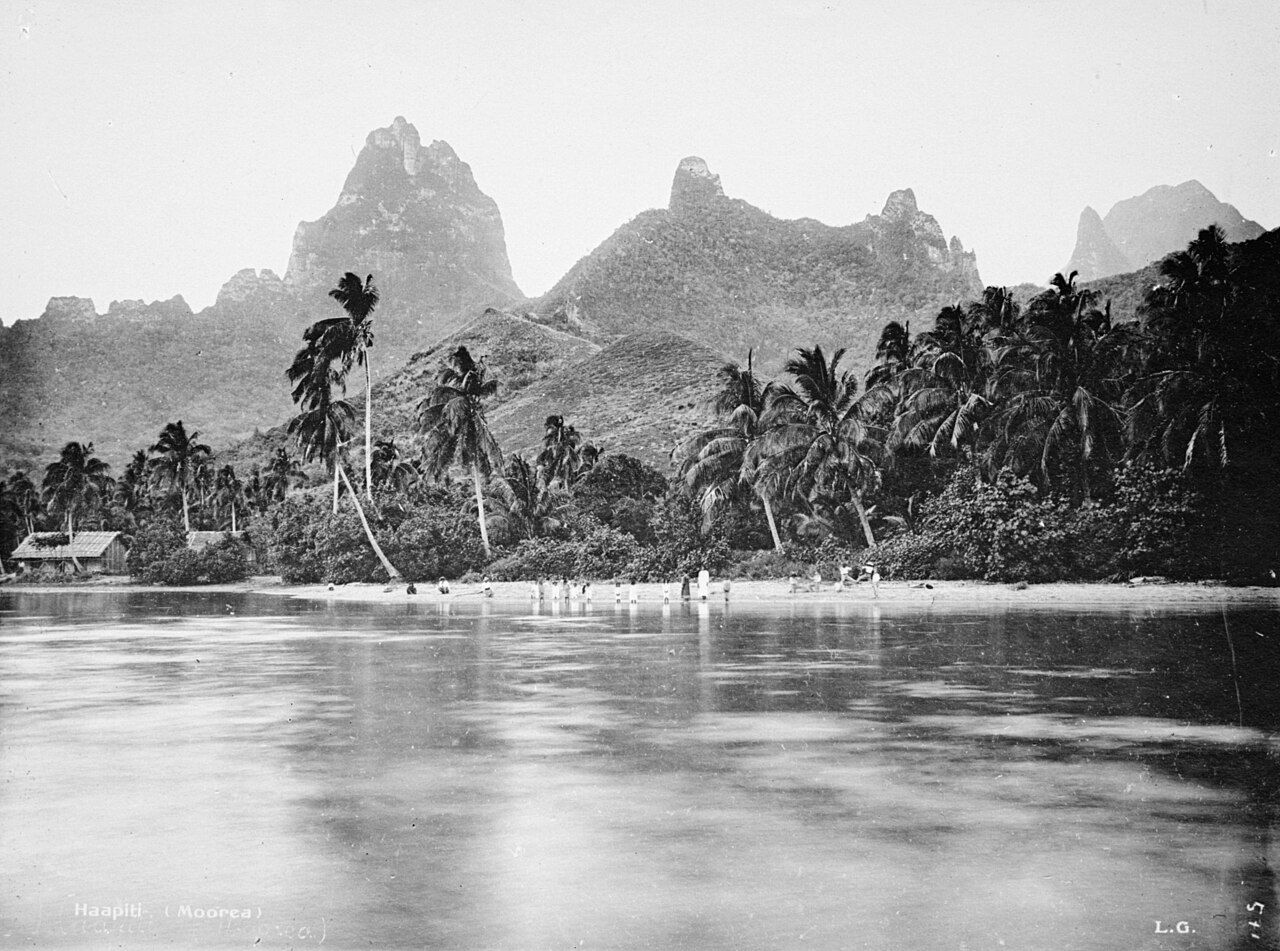
The west coast is quieter, with fewer buildings and long views across the water. The village of Haapiti is known for its surf break on the reef, where waves wrap round a pass and draw experienced surfers in the right conditions. Watch from the shore: the break is over shallow reef and not for beginners.
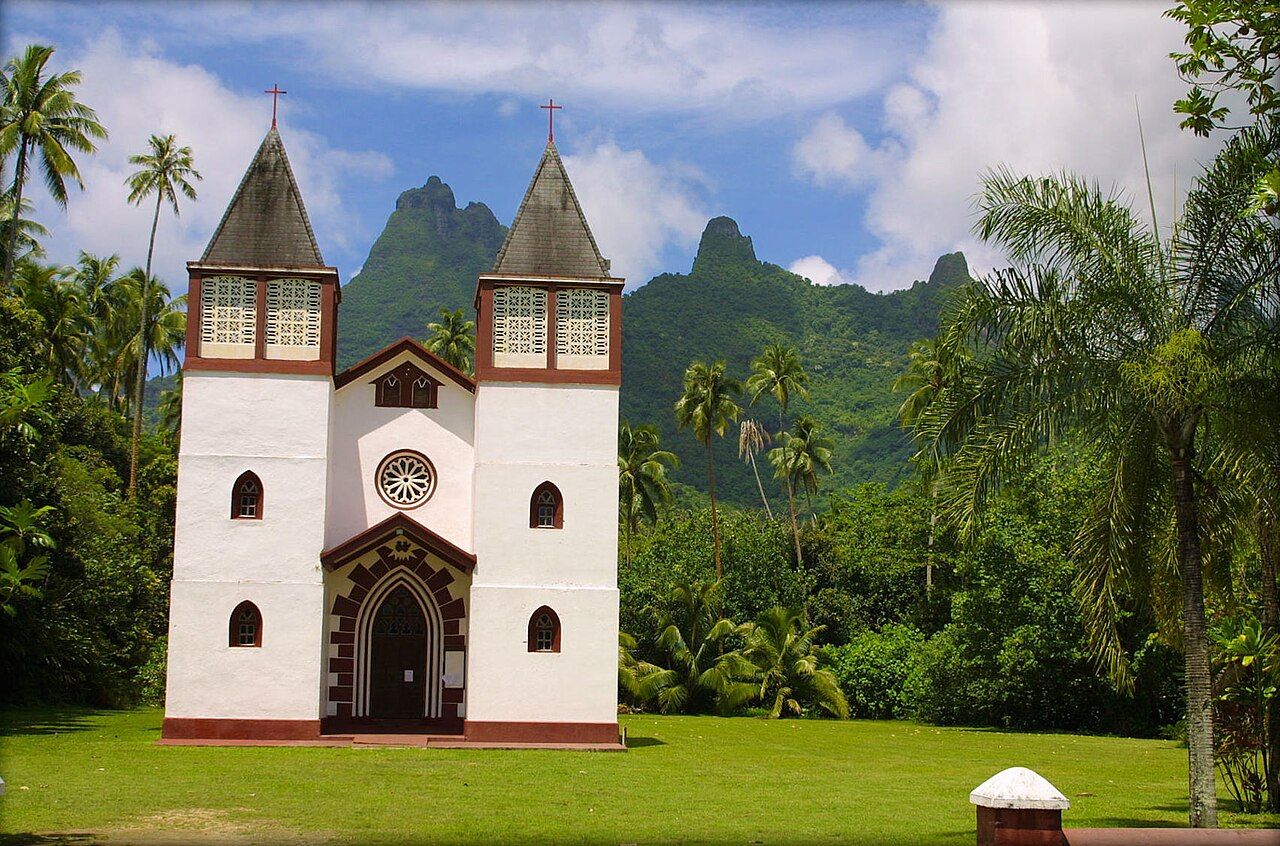
Haapiti's Catholic church of the Holy Family is one of the island's landmarks, with twin towers and a facade that stands out against the mountains behind it. The interior is simple and bright. Visit respectfully, especially on Sunday mornings, when services fill the church and singing carries across the road.
The beaches of the west and southwest coast are small, often with white coral sand and shallow water. Stop wherever you find shade and a gap in the vegetation, and keep an eye on the weather; afternoon showers are common.
The south and east coasts: villages and Temae
The south coast is the quietest part of the island, with small villages, churches and gardens full of breadfruit, banana and coconut trees. Life here moves slowly, and there are few places to eat, so make sure you have water and something to snack on. Afareaitu, on the east coast, was once the island's main settlement and still has an old church and trails up to waterfalls in the valley behind.
Sunday changes the rhythm of the whole island. Church bells ring early, families dress in white for the morning service, and the singing, in Tahitian harmonies, drifts out through open windows into the street. Many shops and snack bars close for the day or open only for a few hours in the morning, and in the afternoon the coast road fills with families heading to the beach. If you drive the loop on a Sunday, buy your food on Saturday, start late and expect to share the beaches.
The loop finishes near Vaiare, but save time for Temae beach, near the airport at the northeast tip of the island. It has a long stretch of pale sand, clear shallow water and views across the channel to Tahiti, whose mountains often wear a cap of cloud while Moorea sits in sunshine. The lagoon here is wide, and in calm weather the colours shift from white to pale green to deep blue as the bottom drops away towards the reef. On weekends, families picnic under the trees; on weekdays it can feel empty. Swim inside the reef and watch for currents near the channels.
Eating along the road
Eating on a round-the-island day is informal. Snack bars serve plates of poisson cru, grilled fish, chicken with fries or chao men, the island's version of chow mein. Many are open only at lunchtime, and some close on Sundays. Fruit stands appear at irregular intervals; when you see a good one, stop.
Fruit stands appear at irregular intervals; when you see a good one, stop.
Most snack bars serve lunch from late morning until early afternoon, then close until the next day. Plan to eat around noon, and if you see a busy place with local customers, it is usually a good sign.
Supermarkets in the bigger villages sell bread, cheese, cold drinks and ready-made salads, which make a simple picnic. If you want to understand more of what you are eating, the guide to poisson cru and the guide to island fruit cover the staples. Drink plenty of water and stop for coconut water whenever it is offered.
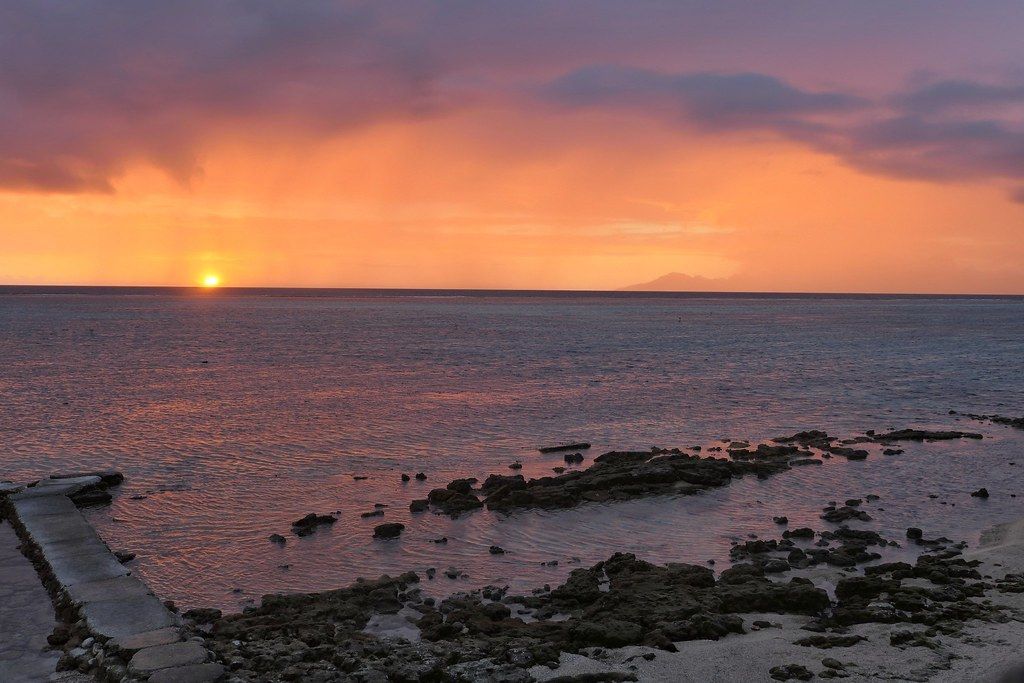
By late afternoon, the light softens on the west coast and the mountains turn gold and then grey. It is a good time to be back near your base, with a cold drink and a view of the lagoon.
