
 1
Walk into almost any snack bar in French Polynesia and you will find chow mein on the menu. At family celebrations, alongside earth-oven pork and poisson cru, there is often a big pot of ma'a tinito. Corner shops, bakeries and market stalls sell Chinese-style pastries and bags of sweet and salty dried fruit. This is the Chinese-Tahitian kitchen, and it is as much a part of island food as coconut and breadfruit.
A community with deep roots
The story of this food is the story of a community that has been part of island life for more than a century and a half, and you taste it every time you order lunch.
Chinese settlers first arrived in Tahiti in significant numbers in the 1860s, brought to work on a cotton plantation on the south coast of the island. Most were Hakka, from southern China. When the plantation failed, many stayed. Further immigration followed in the early twentieth century. Over the generations, Chinese families opened stores, bakeries, restaurants and small businesses across the islands, and many became central to trade and daily life.
For a long time, people of Chinese origin in French Polynesia faced restrictions on citizenship and on owning land. Changes in French law in the 1970s made it much easier to become a citizen, and the community became fully part of public life. Today many families are of mixed Chinese, Polynesian and European descent, and Chinese surnames are common across the islands.
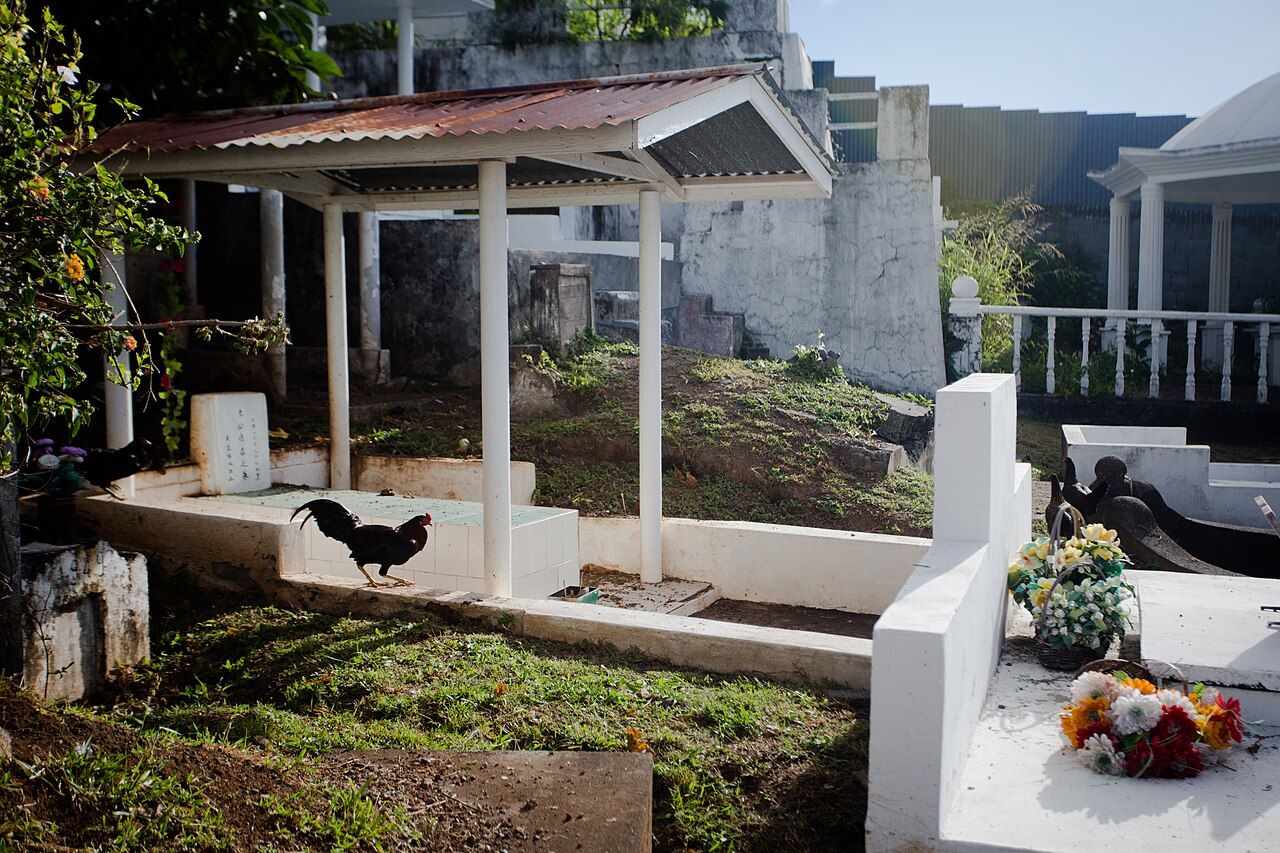
On Tahiti, signs of this history include Chinese cemeteries, such as the one at Arue, and a Chinese temple in Papeete. Chinese New Year is celebrated in Papeete with dragon and lion dances and family meals.
Chow mein, Tahiti style
Chow mein (sometimes written chao men locally) is the dish you will meet most. It is soft egg noodles stir-fried with pork or chicken, sometimes prawns, and vegetables such as cabbage, carrot, beans and onion, seasoned with soy sauce. It is generous, filling and cheap compared with most restaurant food. You will see it at snack bars, at food trucks on the Papeete waterfront, and at family events, often served with a scoop of rice.
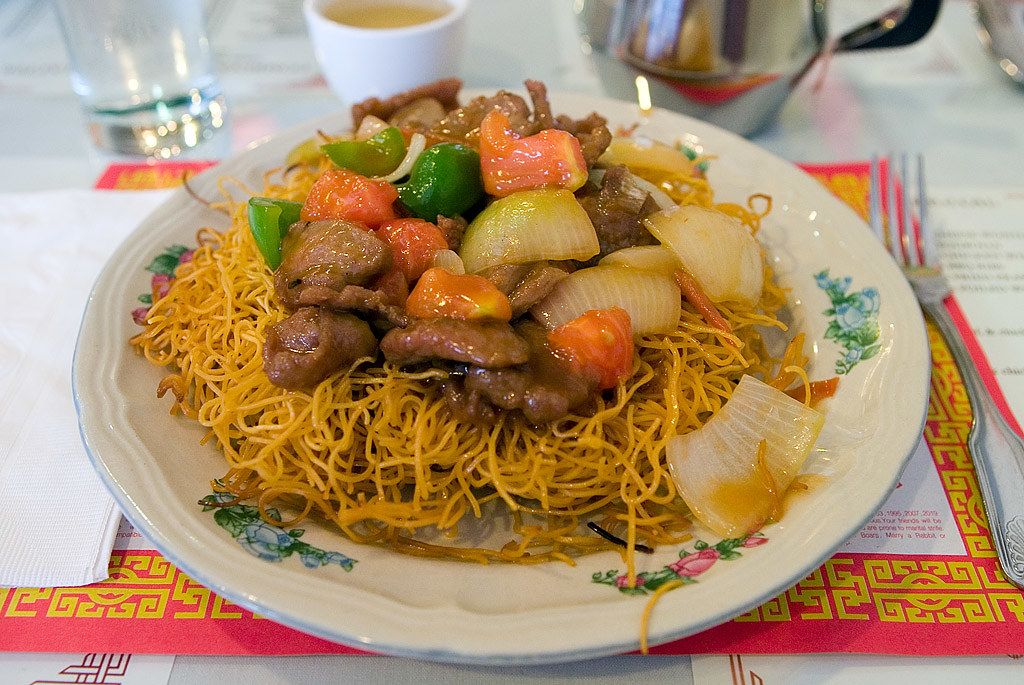
Each cook has a style. Some keep the noodles soft and saucy, others fry them until the edges catch. Some add red beans or pieces of Chinese sausage. A large plate is often enough for two, so ask about portion sizes before ordering extra.
At the evening food trucks of Papeete, chow mein shares the counter with steak frites, crepes and poisson cru. That mix of French, Chinese and Polynesian food on one menu sums up the islands.
Also on the menuSupper by the harbour at the roulottes
Ma'a tinito
Ma'a tinito means "Chinese food" in Tahitian. As a dish, it is a rich stew of red beans, pork, macaroni and Chinese cabbage, with other vegetables, cooked slowly in a soy-based sauce. It is a classic of family gatherings and large celebrations, made in huge pots, and it often appears alongside the dishes from the ahima'a earth oven at Sunday meals.
The beans are soaked and simmered until soft, the pork is cut into chunks with some of its fat, and the macaroni soaks up the dark sauce. The result is thick and comforting, closer to a hearty bean stew than to anything you might order in a Chinese restaurant abroad.
It is homely food rather than restaurant food, so look for it at markets, at family events or on the specials board of a small snack bar. If it is on offer, try it: it is a dish you will rarely find anywhere else.
Other dishes to look for
Chinese-style poisson cru
The islands' most famous dish has a Chinese cousin: raw fish dressed with soy sauce, sesame oil and ginger instead of coconut milk. The guide to poisson cru covers both versions.
Roast pork and buns
Chinese-style roast pork, with crisp skin and fragrant spice, is sold by weight at some shops and markets. Steamed buns, filled with pork, and other pastries are sold at bakeries and stalls, often in the morning.
Firifiri and coconut bread
Firifiri are twisted doughnuts, often eaten at breakfast with coffee or dipped in coconut milk. Coconut bread and sweet buns are sold alongside them. These are everyday treats from island bakeries, many run by Chinese-Tahitian families.
Sweet, salty dried fruit
Bags of dried fruit, coated in sugar, salt and sometimes spices, are a favourite snack. Dried plums, mango and other fruit are sold in small bags in shops and at markets. They are sweet, salty and sour all at once, and children and adults alike eat them by the handful. Green mango with salt or soy sauce is a related snack, explained in the fruit-stand guide.
Be warned: they are addictive, and very salty. Try a small bag first.
Where to eat it
In Papeete, the municipal market has stalls selling Chinese pastries, dried fruit and ready-made dishes in the mornings. In the evening, food trucks on the waterfront serve chow mein and other dishes. On every island, snack bars serve chow mein at lunch, and bakeries sell buns and pastries early in the day.
Eat with the rhythm of the town. Bakeries are busiest at dawn, snack bars at noon, and the food trucks after dark. On Sunday many places close after midday, so plan a picnic or a market lunch for that afternoon.
Prices vary, and the cost of eating out is high in French Polynesia, but Chinese-Tahitian dishes are among the more affordable meals you will find. Check before you go, and look for places busy with local customers, a good sign of fresh, popular food.